A fall can happen in a single second, but the fallout can last for months. The good news: most falls at home are preventable once you know what to look for. This guide walks through the real risks, the fixes that actually work, and the small daily habits that keep you steady on your feet.
Why Fall Prevention Matters for Seniors
Falls are the leading cause of injury among older adults in Canada, and they’re also a major driver of emergency department visits. For someone aged 65 and older, a fall isn’t always just a bruise. Hip fractures, head injuries, and long hospital stays often follow, and recovery can take much longer than people expect. Beyond the physical injury, a fall can bring on a fear of falling that makes people move less, which weakens muscles and actually raises the risk of falling again. That’s the cruel irony of it: pulling back from activity to “stay safe” often backfires. Fall prevention isn’t about wrapping life in bubble wrap. It’s about staying strong, staying mobile, and catching hazards before they catch you.
What Are the Most Common Causes of Falls at Home?
Most falls don’t happen because of one big dramatic moment. They happen because of small, everyday hazards that build up over time. A loose rug edge. A dim hallway. A rushed trip to the bathroom in the middle of the night. According to the Public Health Agency of Canada, falls among older people are closely tied to a mix of physical changes and environmental hazards working together.
Some of the biggest contributors include poor lighting, clutter in walkways, slippery bathroom surfaces, and unsafe footwear. Medical factors play a role too. Vision changes, muscle weakness, balance problems, and dizziness from certain medications can all increase your risk of falling. Some prescriptions, especially sedatives and blood pressure medication, are known to affect balance. That’s why a pharmacist or health care provider should always be part of the conversation. The point isn’t to memorize every risk factor. It’s to recognize that fall prevention works best when you address the home environment and your own health at the same time.
How to Make Your Home Safer: Room-by-Room Guide
Think of your home as a series of checkpoints. Walk through it the way a home safety inspector would, room by room, looking for anything that could catch a foot or cause a slip.
Entryways and Stairs
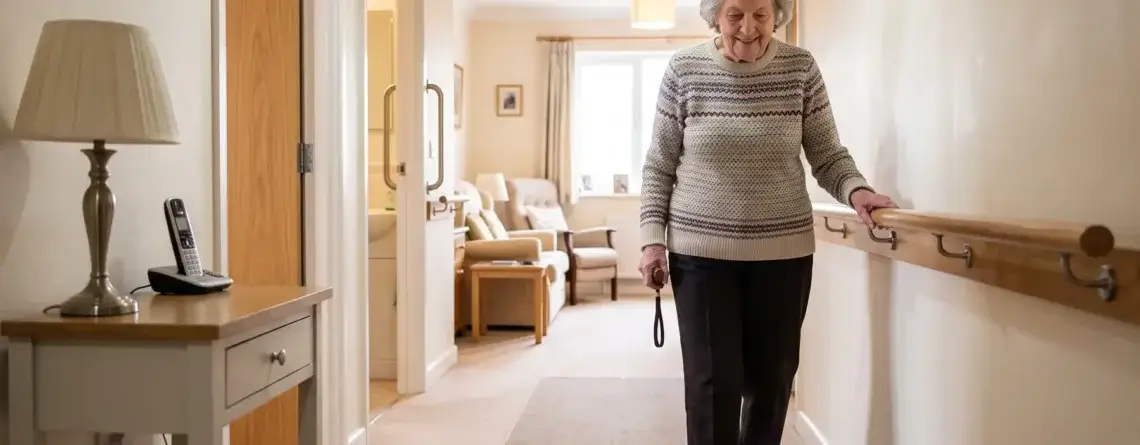
Entryways take a beating. Wet boots, uneven mats, and poor lighting all show up right at the front door. Add a sturdy handrail on both sides of any staircase, not just one. Mark the edge of each step with a strip of bright, non-slip tape so the edges are easy to see, especially in low light. Keep a small bench near the entry so shoes can be put on while seated instead of balancing on one leg.
Living Room and Hallways
Open floor plans are safer floor plans. Move furniture so there’s a clear, wide path to walk through, and get rid of anything you have to step around. A narrow hallway with boxes or shoes stacked along the wall is a hazard waiting to happen. Secure loose carpet edges and skip the throw rugs entirely if possible; they’re one of the most common trip hazards in any home. Check that light switches are easy to reach from the doorway so no one has to cross a dark room to turn on a lamp.
Bedroom
Falls at night are common because people wake up groggy and rush to the bathroom. Keep a lamp or motion-sensor light within arm’s reach of the bed. Make sure the path from bed to bathroom is completely clear, with nothing on the floor to catch a foot. A bed that’s too high or too low makes getting up harder than it should be, so aim for a height where feet rest flat on the floor with knees bent at roughly 90 degrees.
Bathroom
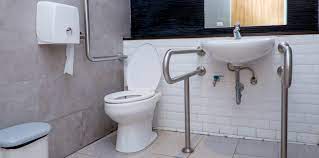
The bathroom is where the highest number of home falls happen, thanks to hard tile, standing water, and a bathtub that’s slick when wet. This is the room where small upgrades make the biggest difference. Installing grab bars near the toilet and inside the shower gives you something solid to hold onto instead of grabbing a towel bar that isn’t built to bear weight. A good look at bathroom safety products can help you figure out exactly what your space needs, from mats to seating to support rails.
Kitchen
Kitchens combine two risky ingredients: spills and step stools. Wipe up spills immediately, and keep frequently used items on lower shelves so there’s less reaching and climbing involved. A rubber-backed mat by the sink helps with wet floors, but make sure it lies completely flat with no curling edges. If you do need to reach something high, use a stool with a wide base and a handrail, never a chair.
Best Safety Products and Equipment to Prevent Falls
The right equipment doesn’t just reduce fall risk. It also restores confidence, which matters just as much.
Grab Bars and Handrails
The best grab bars for seniors are the ones installed into wall studs or backed with proper reinforcement, not suction-cup versions that can slip at the worst possible moment. Bathroom grab bars for elderly users should go near the toilet, inside the tub, and at the shower entrance. Browsing a dedicated selection of grab bars makes it easy to find the right length and grip style for your bathroom layout.
Non-Slip Mats and Treads
A textured, rubber-backed mat placed inside and outside the tub cuts down on slipping dramatically. Non slip bath mats for elderly users should have suction grips on the underside and be replaced once the texture starts to wear smooth. The same idea applies to stair treads: a strip of grip tape on each step adds traction that painted wood or tile simply doesn’t offer.
Walkers, Canes, and Mobility Aids
A cane offers light support for people who mostly need help with balance, while a walker provides a wider, more stable base for those who need extra weight support. Senior mobility aids for fall prevention should always be fitted to the user’s height. Walkers and canes to prevent falls only work well when the height is right and the grip is comfortable, so it’s worth getting a proper fitting rather than guessing. A browse through available walkers shows just how many styles exist for different needs, from basic folding frames to models with seats and wheels.
Night Lights and Improved Lighting
Motion-sensor night lights along hallways and near the bathroom door remove the guesswork of walking in the dark. Bright, even lighting throughout the home, especially over stairs, reduces the chance of misjudging a step.
Raised Toilet Seats and Shower Chairs
A raised toilet seat reduces how far you need to lower yourself, which takes pressure off the knees and hips. A shower chair for seniors fall prevention lets you bathe seated instead of standing on a wet, uneven surface. Looking through a range of shower chairs can help match the right style, whether that’s a simple bench or a chair with a backrest and arms.
Simple Daily Habits to Reduce Fall Risk
Equipment helps, but daily habits are what actually keep you safe day to day.
Wear Proper Footwear
Skip socks and slippers with smooth soles. Proper footwear with a firm sole and a snug fit gives you far more grip and stability than going barefoot or sliding around in loose shoes.
Keep Walkways Clear
Make it a habit to scan the floor before walking through any room. Cords, shoes, pet toys, and stray papers are all easy to trip over and easy to miss until it’s too late.
Move Slowly When Standing Up
Standing up too fast can trigger a drop in blood pressure, which brings on dizziness and unsteadiness. Pause for a few seconds after sitting up before taking that first step, especially first thing in the morning.
Use Assistive Devices Correctly
An assistive device only helps if it’s used the way it was designed to be used. Leaning a cane in the corner “for emergencies only” defeats the purpose. For a deeper look at how these tools support day-to-day independence, this mobility aids guide breaks down which device fits which situation.
Exercises to Improve Balance and Strength
Balance and strength work together, and both fade without regular use. Strength training two or three times a week helps maintain the muscle needed to catch yourself if you stumble. Simple physical activities like standing on one foot while holding a counter, or walking heel-to-toe in a straight line, build stability over time.
Tai chi is one of the best fall prevention exercises for seniors because it combines slow, controlled movement with balance training in a low-impact format. Many community centres across Canada offer a tai chi or general exercise program aimed specifically at older adults. Balance exercises to prevent falls in seniors don’t need to be complicated. Even standing up from a chair without using your hands, done a few times a day, builds real functional strength. Before starting anything new, it’s worth talking to a physical therapist or occupational therapist about which movements suit your current ability.
How to Create a Personal Fall Prevention Plan
A fall prevention plan works best when it’s specific to you, not a generic checklist. Start by walking through your home and writing down every hazard you notice, no matter how small it seems. Next, list your personal risk factors: medications, vision changes, balance issues, or health conditions that affect movement.
From there, prioritize. Fix the highest-risk items first, usually bathroom and stair hazards, then work through the rest room by room. Set a reminder to assess your risk again every few months, since homes change as furniture shifts and new clutter creeps in. A written plan also gives you something concrete to review with a health care provider or therapist, which makes the next conversation about safety far more productive than a vague “I’ve been a little unsteady lately.”
When to Ask for Professional Help
Some fall risks need a trained eye. An occupational therapist can do a full home safety assessment and recommend changes specific to your mobility and living space. A physical therapist can build a program that targets exactly the muscles and balance skills you need. If you’ve had a recent fall, sudden dizziness, or a change in medication, ask your doctor for a referral rather than waiting to see if things improve on their own. These professionals see patterns that are easy to miss from the inside, and their guidance often prevents a second, more serious fall down the road.
Frequently Asked Questions
What is the number one cause of falls in seniors at home?
Environmental hazards, especially clutter, poor lighting, and slippery bathroom surfaces, are consistently ranked as the top contributors, often combined with balance or vision issues.
How can I make my bathroom safer without a major renovation?
Adding grab bars, a non-slip mat, and a shower chair covers most of the risk without any construction work. These upgrades install quickly and make an immediate difference.
Are grab bars better than towel racks for support?
Yes, by a wide margin. Towel racks aren’t built to hold body weight and can pull away from the wall under pressure, while grab bars are anchored specifically for support.
What kind of shoes should seniors wear indoors to prevent slipping?
Closed-back shoes with a firm, non-slip sole offer the most stability. Loose slippers and socks alone should be avoided on hard flooring.
How do I know if I need a walker or cane?
A cane usually suits people who need light balance support, while a walker is better for those who need a wider base or more weight-bearing help. A physical therapist can confirm which is the right fit.
Can medications increase my risk of falling?
Yes. Certain medications, particularly sedatives and some blood pressure drugs, can cause dizziness or affect balance. Ask your doctor or pharmacist to review your prescriptions if you’ve noticed unsteadiness.
What should I do if I fall and can’t get up?
Stay calm, check for injury before moving, and call for help using a phone, medical alert device, or by calling out. Avoid rushing to stand until you’re sure nothing is seriously hurt.
Are home safety modifications covered by insurance or government programs in Canada?
Some provinces offer funding or grants through programs connected to the Division of Aging and Seniors, and certain private insurance plans cover assessments or equipment. Coverage varies, so it’s worth checking with your provincial health office.
How often should I check my home for fall hazards?
A full walkthrough every few months is a reasonable habit, with quick spot-checks anytime furniture is rearranged or new items are brought into the home.
Is it safe for seniors to use step stools at home?
Only with a wide, stable base and a handrail to hold onto. A stool without support is one of the more common causes of falls in the kitchen, so it’s often safer to store frequently used items on lower shelves instead.